Skip to product information
1 of 9

NWC Naturals

Tri-KRILL™ Krill Oil Capsules for Pets

Tri-KRILL™ Krill Oil Capsules for Pets

Regular price $48.99 USD
Regular price $48.99 USD Sale price $48.99 USD
Sale Sold out
Shipping calculated at checkout.

  1. Tri-KRILL™ for Pets 3x formula with AstaREAL for maximum Krill Oil benefits
  • Powerful Antioxidant Formula
  • Supports Your Pet’s Immune System
  • Easy to use capsules with no fishy breath
  • Recommended for joint support, supporting normal flexibility

Product Description

Tri-KRILL™ Krill Oil for Pets

Product Highlights

NOW! With DRcaps™ capsules (digestive resistant) to help protect our ingredients from stomach acid.

Our new improved krill oil with the same great formula in our Patented process Lipid Fusion Capsule Technology™.

We have improved our Tri-KRILL™. Now it features our Liqui-Krill™ capsule delivery system.

Lipid Fusion Capsule Technology™

krill oil capsules

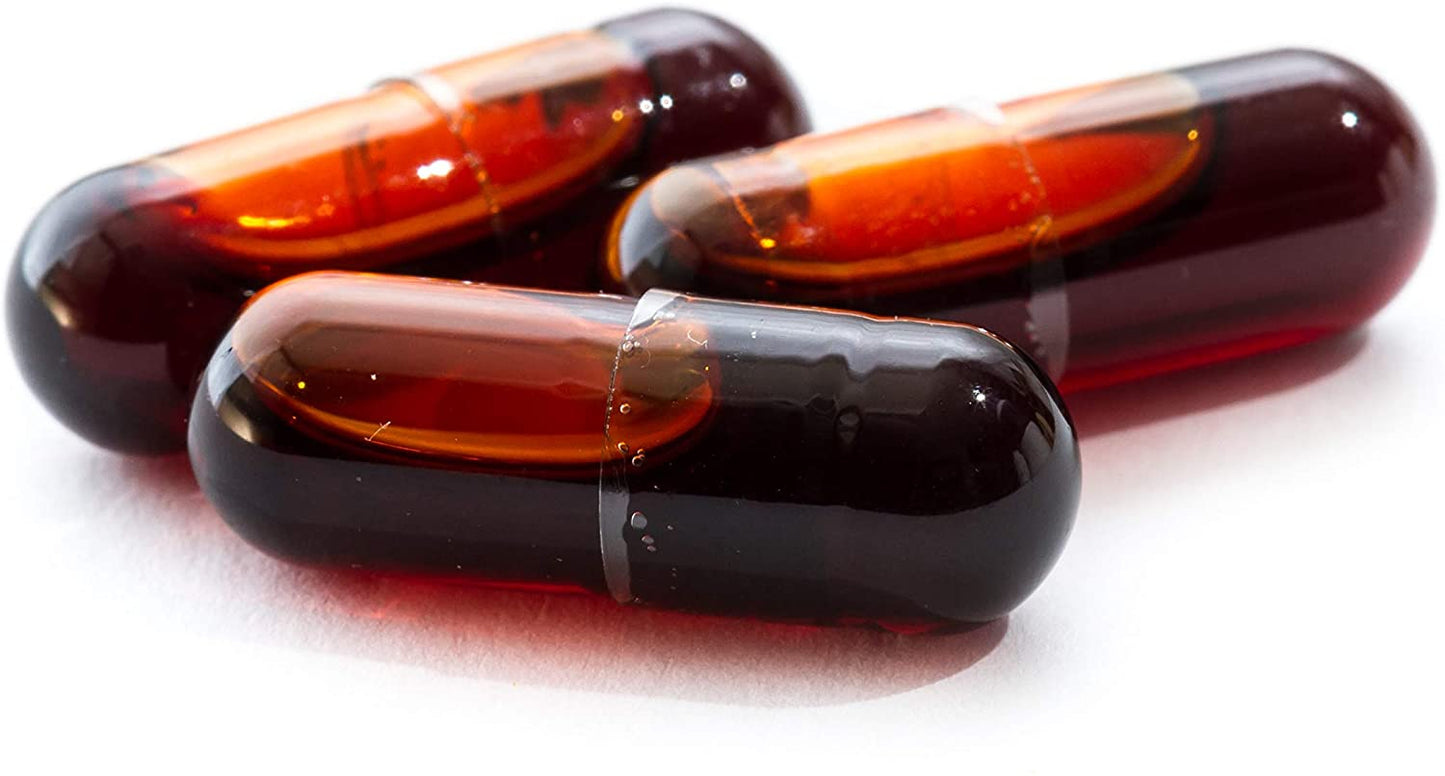
We call it the Liqui-Krill™ delivery system. It makes the krill oil more stable, with less odor and no more leaking gel caps.

What is it? It is a two-piece veggie capsule specially designed for a secure, leak-proof, airtight product! Its unique “bubble in the capsule” look stands for quality and stability.

We strive to be one of the first in technology and quality.

This innovative stabilization keeps krill oil fresh.

Remember, each 500 mg capsule delivers 6 mg of astaxanthin.

No one else offers this patented formula and procedure.

Certifications & Quality

  • Certified Vegan, Non-GMO, Vegetarian Society, Halal & Kosher certifications
  • Outstanding quality – manufactured per cGMP guidelines
  • Certified QA system for traceability of raw materials

Compare & Learn More

Key Benefits for Pets

  • Tri-KRILL™ supplement is the king of all fatty acid food supplements.
  • Features 6 mg of astaxanthin per capsule—the highest of any krill oil supplement.
  • Contains 24× more astaxanthin than salmon.
  • Four times more potent than fish oil, delivering four times the benefit.

The most astaxanthin per serving of any krill oil product on the market.

Tri-KRILL™ is sourced from Antarctic krill, combining phospholipids with 6 mg astaxanthin per Liqui-Krill™ capsule.

Omega-3 Benefits

Why supplement my pet’s diet with Omega-3 fatty acids?

Today’s pet foods contain excessive Omega-6 fatty acids from grain-fed meats. Too much Omega-6 can cause health issues. Supplementing with Omega-3s helps restore balance.

Krill oil absorbs quickly, supporting agility, heart, brain, nervous system, skin, and coat health.

Fish Oil vs. Krill Oil

  • Higher concentration of Omega-3s and natural Astaxanthin compared to fish oil
  • No mercury risk—krill oil is mercury-free
  • Highly bioavailable EPA & DHA for cognitive & inflammatory support
  • Four times more potent than fish oil thanks to Astaxanthin’s antioxidant power

What Is Astaxanthin?

Astaxanthin is a potent natural antioxidant from phytoplankton, more active than beta-carotene or lycopene in neutralizing free radicals. It supports cardiovascular, respiratory, joint, and athletic health.

It gives salmon its red color. While krill naturally contain astaxanthin, we add extra to ensure maximum potency.

Benefits of Krill

  • Contains phosphatidylcholine-bound choline, supporting neurotransmitter acetylcholine production
  • Adequate choline supports attention, memory, and muscle function

Krill & Sustainable Harvesting

Krill (Euphausiacea) are shrimp-like crustaceans fueling marine food chains. Harvested sustainably from Antarctic waters, they live up to 10 years and feed on phytoplankton.

Krill oil is rich in omega-3s without fishy burps and has higher astaxanthin levels than fish oil.

Side Effects & Interactions

Pets with seafood allergies should avoid krill oil. Consult a veterinarian for bleeding disorders.

Potential interactions with blood thinners (e.g., aspirin, warfarin) or NSAIDs (e.g., ibuprofen)—use under professional supervision.

Additional Resources

NWC Naturals Inc.


The link above includes our current price list »

Our Library

More information

Astaxanthin has a significant protective role in nature. 

Astaxanthin is the red pigment that accumulates in commonly eaten seafood, such as lobster, salmon, trout, red sea bream, shrimp, and crayfish. 

Astaxanthin is a carotenoid, the same family of molecules found in carrots, tomatoes, and other colorful fruit. In fact, astaxanthin the most abundant carotenoid pigment found in aquatic animals and the marine world. 

Single-celled microalgae plants occupy the very bottom of the food chain, combining organic materials with sunlight to produce the vast majority of living material on the planet.  Haematococcus pluvialis is one of these and it is the richest source of astaxanthin. 

What are Krill and where do they come from?

Krill is the common name given to the Euphausiacea of shrimp-like marine crustaceans. Also known as euphausiids, these small invertebrates are found in all oceans of the world. The common name Krill comes from the Norwegian word krill, meaning "young fry of fish", which is also often attributed to other species of fish.  Krill are found in all oceans of the world but harvested from the Antarctic waters and Southern Oceans. 

These small crustaceans fuel the oceans of the world.  Krill feed on phytoplankton, microscopic, single-celled plants that drift near the ocean’s surface and live off carbon dioxide and the sun’s rays.  They feed hundreds of animals from fish, birds and whales.  Antarctic krill are among the largest of the 85 known krill species  and  can live up to 10 years.  

What does astaxanthin do in nature? 

• Astaxanthin protects the highly concentrated polyunsaturated fatty acids found in cell membranes and muscles in salmon. These fats are the main energy powerhouse that enables salmon to accomplish their well-known upstream marathon to spawn. Salmon muscles contain the highest concentration of astaxanthin in the animal kingdom. 

• Astaxanthin is an excellent antioxidant, scavenging free radicals and thus regulating the process of oxidation in animals’ (and humans’) bodies. 

• Astaxanthin protects marine creatures, such as Antarctic krill, as well as the phytoplankton on which the krill feed (and human skin), against UV light damage. 

• In fish, astaxanthin is believed to have a synergistic effect on other important antioxidants such as Vitamins C and E. 

Antioxidants like astaxanthin disarm dangerous free radicals before they have a chance to damage proteins, fats, and the genetic material of cells. 

Astaxanthin Research 

Astaxanthin has extraordinary antioxidant properties, which has been demonstrated in numerous studies conducted throughout the past decade.  Astaxanthin, like other carotenoids, sacrifice themselves in order to protect body cells. 

Carotenoids absorb the excited energy of singlet oxygen – a highly reactive form of oxygen that if left unchecked can directly damage fats, proteins, and DNA in the body. By sacrificing itself, astaxanthin prevents surrounding cells from being damaged. 

 What is the difference between Phospholipid vs. Triglyceride Forms ? 

Krill oil is a unique source of omega-3 fatty acids, choline, and astaxanthin. One thing that differentiates krill oil from other sources of omega-3 is that, in krill oil, the fatty acids EPA and DHA are bound to phospholipids instead of triglycerides. 

This phospholipid form is structurally the same as our cell membranes. Moreover, these phospholipid forms are handled differently in the digestive tract. Phospholipids spontaneously form micelles, which can be transported easily in the aqueous environment. Phospholipids can be absorbed intact or in their lysophosphatidylcholine form.

 Triglycerides, on the other hand, are insoluble in an aqueous environment and require bile salts for their emulsification. While triglyceride forms of EPA and DHA remain valuable elements of supplemental nutrition, phospholipid-based forms provide unique benefits that, when coupled with added choline and astaxanthin, render krill oil a novel nutrient complex with significant clinical benefit.

Ingredients

Natural Ingredients;


Beyond Fish Oil!  Tri-Krill™ contains an extract of Krill sourced directly from the Antarctic.


Tri-KRILL ™ sourced directly from the Antarctic; which combines the power of   Krill Phospholipids with 6mg of astaxanthin per capsule. The highest of any krill supplement.


Krill oil:


Krill are found in all oceans of the world but harvested from the Antarctic waters and Southern Oceans. These   small crustaceans fuel the oceans of the world.


Krill oil contains omega-3 fatty acids, and contains an antioxidant called astaxanthin.


Krill oil also has Choline which is found in krill phospholipids as part of the Phosphatidyl choline molecule. Choline is not found in fish triglycerides. Choline has critical functions as a precursor to  the neurotransmitter acetylcholine.


Phospholipids:


Phospholipids with bonded Omega 3s.  Phospholipids; are a class of lipids that are a major component of all cell  membranes as they can form lipid bilayers.


Omega-3 Fatty Acids:


Common sources of Omega -3 fatty acids include fish oils, krill oil, algal oil, squid oil and  flaxseed. The health benefits of the long-chain omega-3 fatty acids primarily EPA and DHA are the best known.


EPA :


EPA is highly unsaturated fat they contain 6 and 5 double bonds on their long structural chain. These polyunsaturated fats play a very important role with the function of our pets bodies.


Krill Oil :


Can be seen as a category of omega-3 fatty acids unto itself. It is these additional attributes that have         many customers now looking to krill oil as a value-added component of a healthy lifestyle.


Additional Attributes;


The unique properties of krill oil and the potential to provide benefits that include those found in fish oil, plus those that are unique to krill oil. For this reason, we like the phrase "beyond fish oil."


Beyond fish oil means that the inherent benefits of omega-3 fatty acids from fish oil are well documented and worthy of our respect. Beyond this, the composition of krill oil affords health benefits that are also rooted in sound scientific principles.


For this reason, krill oil can be seen as a category of omega-3  fatty acids unto itself. It is these additional attributes that have many customers now looking to krill oil as a value-added component of health for their pets.


These attributes include the following;


Krill omega-3 fatty acids are bound to  phospholipids, as opposed to triglycerides.


Krill PL contain choline, a neurotransmitter precursor important to brain and muscle tissue.


Astaxanthin, a naturally-occurring carotenoid  molecule with powerful antioxidant activity.

How to use?

Directions

Suggested use: 

Give 1 capsule a day for pets weighing up to 60 pounds with food. Over 60 pounds give 2 capsules.  For therapeutic results give 2 capsules a day.


Can I break it in half?

You cannot break it open with our new process it is seal for freshness. However, you can simply give your pet the capsules by placing it a treat. Keep in mind that the Liqui-Krill™ capsules are human grade supplements so they are very safe for pets. Tri-KRILL™ does not contain any ingredients that are harmful for pets or your whole family.

Side Effects

Pet with allergies to seafood shouldn't use krill oil.

Videos

Reviews

(10)

Product FAQs

FAQs


What is so special about Tri- KRILL ™?

Tri- KRILL ™ oil contains no less than 42% Phospholipids and 1500 ppm of Astaxanthin, the highest of any krill oil product on the market. Every batch is tested for contaminants and heavy metals. We feel  we have set the highest standards for quality in our krill oil. It is also independently tested with 3rd party testing.


How is Tri- KRILL ™ Oil manufactured?

Our Tri- KRILL ™ Oil is manufactured at a state of the art manufacturing facility that has been working with nutritional lipids for over 12 years. This facility is recognized worldwide for its standards and the quality of lipids they produce.


How is the Krill Oil harvested?

Each trawler is allowed to harvest during the main season and only about 1% of the allowable limit is actually harvested. Krill harvesting is among the most regulated of any harvesting or fishing methods in the oceans.


Is the krill population in the oceans sustainable?

Our krill is made from Euphausia superb (Antarctic Krill). This is one of the earth's most abundant and sustainable organisms. Antarctic krill is the largest biomass on earth. The total quantity is estimated to be between 500 and 800 million tons. The weight of this biomass is almost double that of all the humans on earth.

The krill harvest is well below conservative international catch guidelines. Most of the harvested krill is used for fish feed in salmon farms and the quantities harvested are less than 1% of the 1% harvested annually.


What Is Astaxanthin?

Krill oil contains high levels of one of the most powerful natural antioxidants called Astaxanthin. Astaxanthin is a carotenoid molecule from the same family as beta-carotene, lycopene, and zeaxanthin, though astaxanthin appears to be more active in quenching superoxide, hydroxyl, and  other radical species.

 Astaxanthins are what gives salmon its red color. Krill get their astaxanthin from small phytoplankton, their primary source of food.

While krill contain natural levels of astaxanthin, we enrich our Tri- KRILL ™ with additional astaxanthin to the highest levels available.  Our Tri- KRILL ™ contains 12 mg. of astaxanthin. This is in recognition of the tremendous antioxidant value astaxanthin adds to both product stability and clinical outcomes.


Can I give Krill Oil to my pet if he/she is allergic to fish or shellfish?

Absolutely not. Talk with your veterinarian if you suspect your pet is allergic to shellfish or fish. Some  krill oil blends also contain some fish oil as a carrier, and fish can end up in the krill biomass as a by-catch. So, if your pet is allergic to any fish do not give him/her this product.


Can I break it in half?


You cannot break it open with our new process it is seal for freshness. However, you can simply give your pet the capsules by placing it in their food or it can be given separately as a treat. Keep in mind that the Liqui-Krill™ capsules are human grade supplements so they are very safe for pets. Tri-KRILL™ does not contain any ingredients that are harmful for pets or your whole family.


Why is it so important to supplement my pet’s diet with Omega 3 fatty acids?

Today, our pets are receiving more Omega 6 fatty acids in their diets than necessary. The cattle meat used in most pet foods contains an unnecessary amount of Omega 6 fatty acids because the cattle are now being fed grains instead of grass. Too many Omega 6 fatty acids can cause many problems in our pets. Supplementing our pets’ diets with Omega 3 fatty acids will help to normalize this imbalance. Krill Oil absorbs quickly into the system, providing benefits such as agility help maintain a healthy heart, brain and nervous system. Ask your veterinarian about how Krill Oil can benefit your pet! 


Isn’t fish oil a good source of Omega 3 fatty acids too?

Yes. However, Krill oil contains a higher concentration of Omega 3 fatty acids, and also contains Astaxanthin, which is an added nutritional benefit. It does not contain mercury and therefore there is no added risk of heavy metal poisoning. In addition, Krill Oil contains highly bioavailable EPA and DHA which can aid in cognitive function, and help fight mood swings and inflammation. Krill Oil is FOUR times more potent than Fish Oil and therefore has four times the benefit!

View full details

Certified from Source to Shelf

Our whole-food, enzyme-activated formulas are made in a U.S. GMP facility and verified by third-party labs. We use human-grade ingredients, transparent labels, and our L.E.A.D.S.® delivery system to maximize absorption—no fillers, no artificial colors, gluten, or dairy.

  • GMP-Certified (USA) — Manufactured in audited, cGMP facilities
  • NASC Certified — Member of the National Animal Supplement Council quality program with standards for labeling, GMPs, lot tracking, and adverse-event reporting.
  • L.E.A.D.S.® Delivery — Enzyme-mineral transport for better uptake
  • Third-Party Tested — Microbials, heavy metals & purity confirmed
  • Human-Grade Ingredients — Pet formulas meet AAFCO guidance
  • Non-GMO • No Fillers — Gluten & dairy free; no artificial additives
  • CFU-Verified Probiotics — Clinically informed strains, dose on label = dose in bottle
  • 16+ Digestive Enzymes — Broad-spectrum support in key products
  • Veterinarian & Naturopath Formulated — Real-world dosing, practical results